
In 2018, I was awarded a NSW Postgraduate scholarship by the Australian-American Fulbright Commission. I spent my nine-month scholarship based at the University of Washington in Seattle.
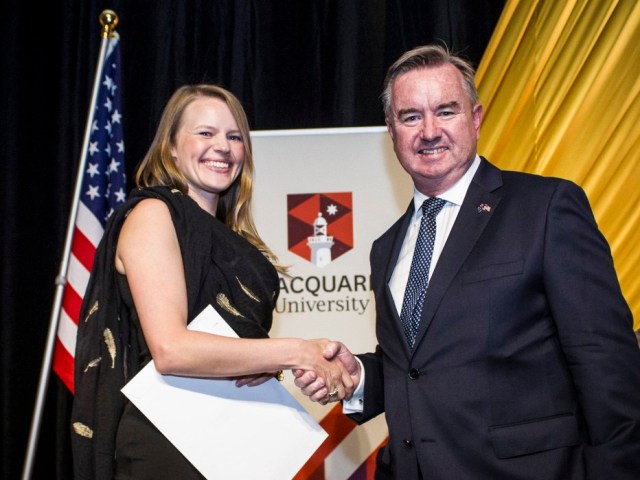
Since my scholarship was announced, I’ve been contacted for advice by many people who are interested in writing an application or who have reached the interview stage. I am always happy help with this where I can, but unless applicants are applying for a project in environmental research and I can talk to them about specific research ideas or US contacts, I find that I am often repeating the same general information about the application process. I decided that writing up my advice here would be a good way to share it.
Please keep in mind that the application process may change every year and differs between scholarship schemes so you should check the requirements thoroughly in case they’re different from my experience. What I have written here is most relevant for Australian applicants.
What kind of scholarship are you applying for?
The Australian-American Fulbright Commission offers several pools of scholarships, including postgraduate, postdoctoral, and several professional opportunities. As I received a postgraduate research scholarship, my advice applies best to that category but the advice may be useful to others.
Preparing an application
I highly recommend getting the ball rolling early. The online form for the scholarships is not all that user-friendly and in addition to having to deal with the form, preparing additional information can take time. For example, not only did I have to provide certified transcripts of my Masters results, but I had to get in touch with my former university and ask them to complete a form stating where I ranked within my class. You will also need to identify referees and have them fill in the referee form online before you can submit your application. You don’t want to be chasing things like these up at the last minute.
For a research scholarship, you will need to prepare a research proposal and (at least in my case) have already identified a host organisation that is willing to take you on. It’s worth asking whether there will be any additional costs. I didn’t do this, and discovered that there was a fee of about USD$1300 required to be recognised as a visiting scholar at my host university, plus about $50 per quarter to maintain a local email address and access to university facilities.
You should be able to demonstrate in your proposal why your project will mutually benefit Australia and the USA, as well as convincing the review panel why this research is important and why you are the best person to undertake it. You will also need to prepare a personal statement which should support this. Both of these pieces of writing should be carefully planned out and I recommend asking a peer or mentor to look over them to pick up mistakes and provide feedback. Don’t ask them the night before you need to submit!
The interview
Don’t be too disappointed if you don’t make it to the interview round – Fulbright scholarships are extremely competitive. If you are lucky enough to be invited to an interview, I can’t recommend highly enough that you prepare for it and practice. One of my supervisors and I prepared practice questions and conducted mock interviews in the lead up to the real thing. This was fairly excruciating but I have no doubt it made me far more confident and composed in the interview.
There will be a panel of interviewers (I think six interviewed me) who will ask you questions about your project, why you want a Fulbright scholarship in particular, and some kind of “surprise” question that may be unrelated to your topic but demonstrates you’d make a good ambassador and can talk about subjects other than your research. For the latter, I was asked what kind of book I would recommend an American colleague to read if they wanted to get a better understanding of Australia, without promoting Australian stereotypes (i.e., not recommending they watch Crocodile Dundee). I’ve also heard others were asked to talk about Australian musicians/bands or art or about Australian or US politics. If you are asked why you want a Fulbright scholarship, you should demonstrate that you’ve done a bit of research on what the program is, who Senator Fulbright was, and what kinds of values the program aims to promote. You can find all of this on the Fulbright website.
One final thing is that you won’t get a lot of warning that you’ve been invited to do an interview. The date of the interview is posted on the website at the time you submit your application, but they will likely invite you to be interviewed with about a week’s notice. Try not to have anything planned for that day as you should be present for your interview. It says on the website that they won’t do Skype interviews – there may be some leniency around this but my experiences is that an in-person interview will go better than a Skype call anyway.
Getting help
Try to talk to people who’ve already been successful in obtaining a Fulbright scholarship. They may let you have a look at their application or cast their eye over yours and could also be good candidates for doing mock interviews with you. I was very lucky that one of my supervisors had had a postdoctoral scholarship with the Aus-USA Fulbright Commission a few years prior, so not only could he help me pitch my application appropriately, but he also knew who I should speak to at the University of Sydney. It might be worth asking your university’s scholarships office for advice, and they may be able to put you in touch with previous successful applicants. Don’t be afraid to ask for help but make sure you do it with plenty of time before your application is due.
Good luck!


 Lily van Eeden
Leave a comment